
Table of Contents
What Are the Signs of Autism at 3 Years Old?
If you’ve found yourself searching for signs of autism at 3 years old, you’re likely paying close attention to your child’s development, and maybe feeling a mix of curiosity, concern, and urgency.
That’s completely understandable.
At this age, children are growing quickly. New words, social behaviors, and imaginative play often emerge almost overnight. So, when something feels “different” or delayed, it’s natural to wonder what it means.
This guide by Texas ABA Centers is here to help you make sense of what you’re seeing, gently, clearly, and without jumping to conclusions. Because while some behaviors may point to autism in toddlers, others may simply reflect normal variation in developmental milestones for 3-year-olds.
Early Signs of Autism at 3 Years Old
When parents look for signs of autism at 3 years old, they’re often trying to understand patterns, not just one behavior, but how several areas of development come together.
According to the CDC, early signs of autism typically involve differences in:
- Social interaction
- Communication
- Behavior and play
At age three, these differences can become more noticeable because expectations around developmental milestones for 3-year-olds are clearer.
Some common signs of autism at 3 years old may include:
- Limited interest in playing with other children
- Difficulty maintaining back-and-forth interaction
- Reduced eye contact or facial expression during communication
- Repetitive movements or behaviors
- Strong preference for routines
- Intense focus on specific objects or topics
It’s important to remember that seeing one or two of these behaviors doesn’t automatically mean autism. What matters most is consistency across situations and developmental areas.
Organizations like UNICEF also emphasize that autism in toddlers often presents as a pattern of social and communication differences rather than a single defining trait.
Should a 3-Year-Old Be Able to Have a Short Conversation?
This is one of the most common questions parents ask and a key part of understanding 3-year-olds’ developmental milestones.
By age three, many children can:
- Use short sentences (3–4 words or more)
- Ask simple questions
- Answer basic “who,” “what,” or “where” questions
- Engage in brief back-and-forth exchanges
You can explore more about these expectations through the CDC developmental milestones guide.
However, communication isn’t just about speaking; it’s about how language is used socially.
In some cases of autism in toddlers, a child may:
- Speak frequently but struggle to hold a conversation
- Talk “at” others rather than “with” them
- Have difficulty responding to questions appropriately
- Use language in repetitive or scripted ways
These patterns can be part of the signs of autism at 3 years old, especially when they appear alongside social or behavioral differences.
Is It a Red Flag if My Child Still Repeats the Same Phrase Over and Over?
This behavior, known as echolalia, can be part of typical development. Many children experiment with language this way.
However, in the context of autism in toddlers, repetition may:
- Replace meaningful communication
- Occur frequently across different situations
- Be used without a clear intent to interact
According to the National Autistic Society, repetitive language is one of several possible signs of autism at 3 years old, particularly when combined with challenges in social communication.
Again, context matters. A single behavior doesn’t define a diagnosis, but patterns can provide useful clues.
Is Lack of Pretend Play a Sign of Autism?
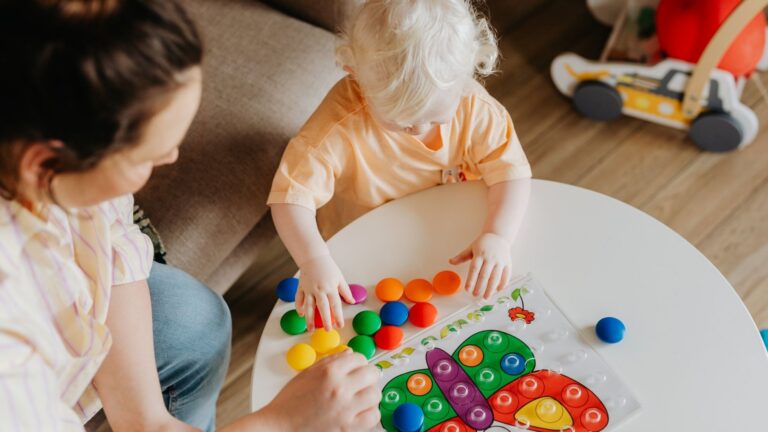
Pretend play—like feeding a doll, pretending to cook, or acting out simple stories—is an important part of developmental milestones for 3-year-olds.
Through imaginative play, children explore emotions, relationships, and creativity.
If a child consistently avoids or struggles with pretend play, it may be one of the signs of autism at 3 years old.
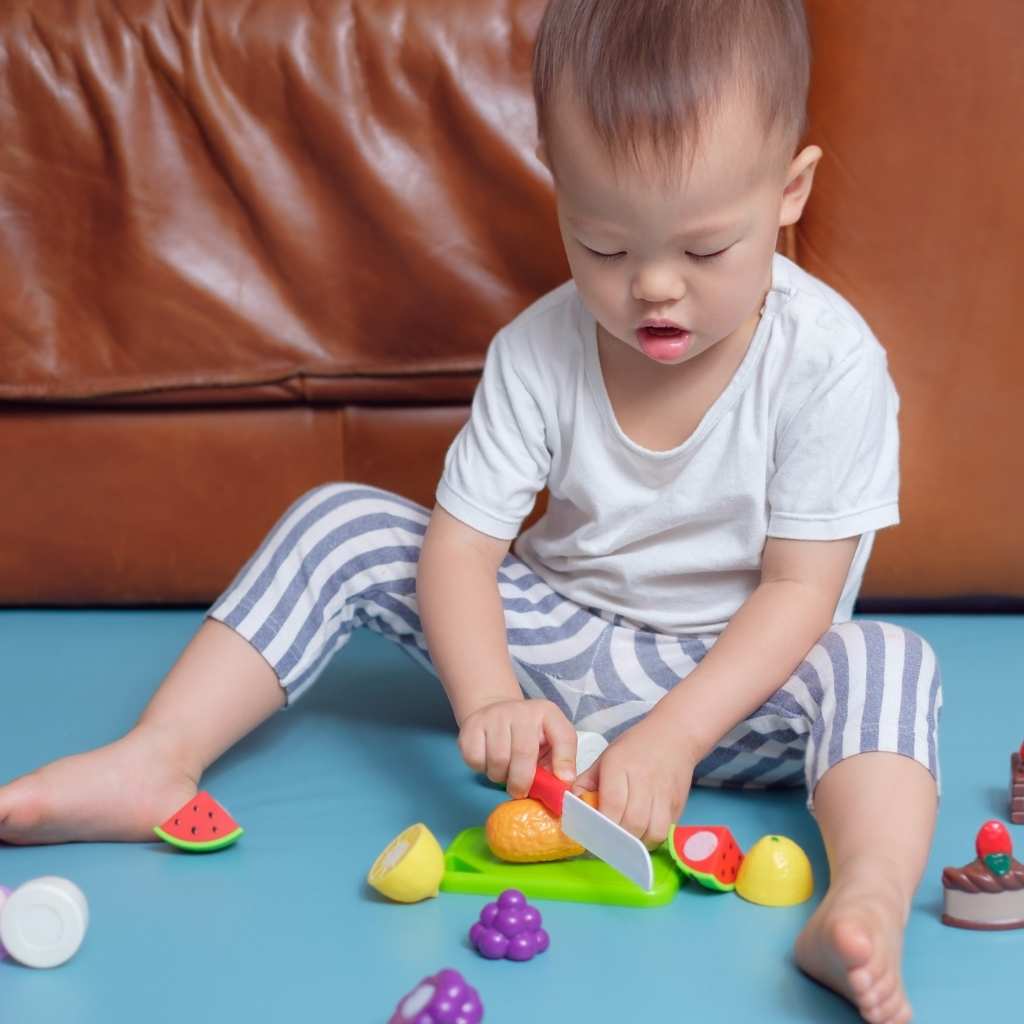
For example, you might notice:
- A preference for lining up toys instead of using them imaginatively
- Limited interest in role-playing activities
- Difficulty imitating everyday actions
Research highlights that reduced symbolic or imaginative play is often observed as a sign of autism in toddlers. Still, some children simply develop these skills later. The key is whether this difference appears alongside other developmental patterns.
Understanding the Bigger Picture: Not Always Autism
It’s easy to jump to conclusions when you’re worried—but many behaviors that resemble signs of autism at 3 years old can also be linked to:
- Speech delays
- Temperament (e.g., shyness or independence)
- Sensory sensitivities
- Developmental variability
What distinguishes autism in toddlers is the combination of differences across multiple areas:
- Social connection
- Communication
- Behavior and flexibility
Professionals look at the whole child—not just one concern—when evaluating development.
Let’s compare with precision when we should consider seeking an autism diagnosis in our 3-year-old:
Milestone Category | What Most Kids Do (75%+) | Red Flag (Act Now) |
Social | Notices other children and joins them to play. | Ignores other children; does not notice when someone is sad/hurt. |
Language | Uses at least two “back-and-forth” exchanges in conversation. | Repeats scripts/movies instead of using original sentences. |
Emotional | Calms down within 10 minutes of a caregiver leaving. | Extreme, prolonged meltdowns over minor changes in routine. |
Cognitive | Draws a circle when shown how. | Only interested in specific parts of toys (e.g., spinning wheels). |
Communication | Asks “Who,” “What,” or “Where” questions. | Cannot follow a simple 2-step instruction (e.g., “Get your shoes and go to the door”). |
What Should I Do if I Notice Signs?
If you’re noticing possible signs of autism at 3 years old, the most helpful next step is to seek clarity, not panic.
A developmental evaluation can provide answers and direction.
This process typically includes:
- Parent interviews
- Observation of behavior
- Standardized developmental tools
The goal isn’t to label, but to understand how your child learns, communicates, and interacts with the world.
The sooner you have clarity, the sooner you can support your child meaningfully.
How ABA Therapy Supports Children with Autism
If a child is diagnosed with autism, early support can make a meaningful difference.
Applied Behavior Analysis (ABA therapy) is one of the most widely studied therapeutic approaches for supporting autism in toddlers.
Rather than focusing on limitations, ABA therapy helps children build skills such as:
- Functional communication
- Social interaction
- Emotional regulation
- Daily living independence
For children showing signs of autism at 3 years old, therapy is typically play-based, structured, and personalized.
The goal is simple but powerful: helping each child gain confidence, connect with others, and participate more fully in everyday life.
Support for Families Exploring Autism with Texas ABA Centers
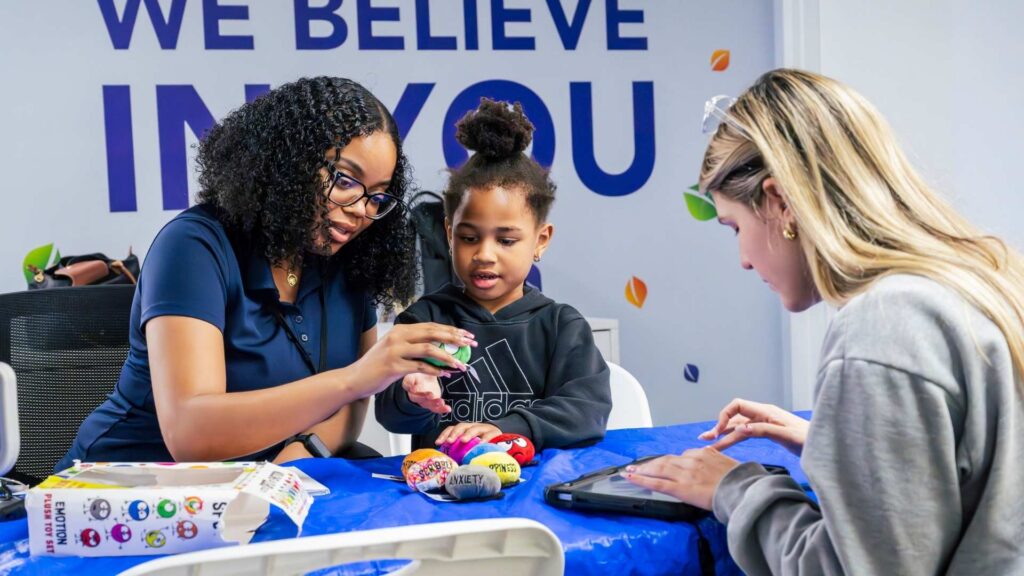
If you’re navigating questions about signs of autism at 3 years old, you don’t have to figure it out alone.
At Texas ABA Centers, we understand how overwhelming this stage can feel. Our team provides:
- Comprehensive autism evaluations
- Individualized ABA therapy programs
- Ongoing support for families
Whether your child is meeting developmental milestones for 3-year-olds or showing signs that need further evaluation, we’re here to help you find answers with clarity and compassion.
If you’d like to learn more or take the next step, schedule a free consultation today with Texas ABA Centers to get personalized guidance by clicking here or calling us at (877) 771-5725, and learn how ABA therapy and early intervention can support your child’s growth, confidence, and independence.
Together, we can determine what support makes the most sense for your child and your family.





 Español