

Table of Contents
What is ABA Therapy for Toddlers?
If you’re researching ABA therapy for toddlers, you may already have a quiet worry that is hard to explain.
Maybe your toddler is not using many words yet. Maybe they melt down when a routine changes, cover their ears in busy places, or seem more interested in spinning wheels than playing with other children.
You may wonder: Is this typical toddler behavior, or is my child trying to tell me something? You may also ask, “What is ABA therapy for toddlers?”
According to the CDC, ABA therapy for toddlers is a supportive, evidence-based approach that helps young children build important skills through play, repetition, encouragement, and everyday routines. It can also help to create a foundation for the skills families explore next.
For toddlers with autism spectrum disorder (ASD), ABA therapy can support communication, social interaction, emotional regulation, behavior, and daily living skills in age-appropriate ways.
Toddlers learn best when they feel safe, connected, and engaged. Because of that, early ABA therapy often looks like play, while still helping your child practice skills that can make daily life easier for them and their loved ones.
In this guide by Texas ABA Centers, we’ll explain how ABA therapy for toddlers works, how it helps, what parents may notice at home, and when early intervention for autism may be the right next step.
First, let’s look at what ABA therapy for toddlers means.
What Is ABA Therapy for Toddlers?
ABA stands for Applied Behavior Analysis. In simple terms, ABA therapy looks at how children learn, what motivates them, and what kinds of support help them build new skills and shape behaviors.
For toddlers, ABA therapy sessions should not involve sitting at a table for hours or attempting to reconstruct personality traits.
A toddler’s session may involve playing with bubbles, blocks, singing songs, pretend play, snacks, puzzles, movement games, or favorite toys to connect with others and apply real-life skills.
For instance, if a toddler wants a toy that’s out of their reach, a therapist may encourage them to ask for help using words, gestures, or eye contact—whatever feels natural and motivating.
If the child struggles with transitions, such as ending play, which is common in ASD, the therapist might introduce a countdown or visual cue to make the process easier and more comfortable.
These supportive steps and adaptations can help toddlers build more confidence and make everyday moments more manageable for them and their families.
That progress is why these early skills matter.
How Does ABA Help Toddlers?
Parents often ask, “How does ABA help toddlers in everyday life?”
The answer depends on the child. Every toddler has different strengths, needs, and developmental goals.
ABA therapy for toddlers often focuses on several foundational areas, including:
Communication Skills
Many families explore supportive autism therapies for toddlers because they have concerns about speech or communication. A toddler may not be talking yet, may use only a few words, or may become upset because they cannot explain what they want.
ABA therapy can help children develop communication skills that match their current abilities.
This may include:
- Using words
- Pointing or gesturing
- Making choices
- Requesting help
- Imitating sounds
- Using pictures or other communication supports
The goal is functional communication. That means helping your toddler express their needs, preferences, and discomfort in a way others can understand. In practice, this can look like small, meaningful steps.
A child does not need to speak in full sentences to make progress. Learning to point to a snack, hand a parent a toy for help, or say “more” during a favorite game can be a meaningful step forward.
Social and Play Skills
Some toddlers with autism prefer to play alone, repeat the same activity, or seem unsure how to join others.
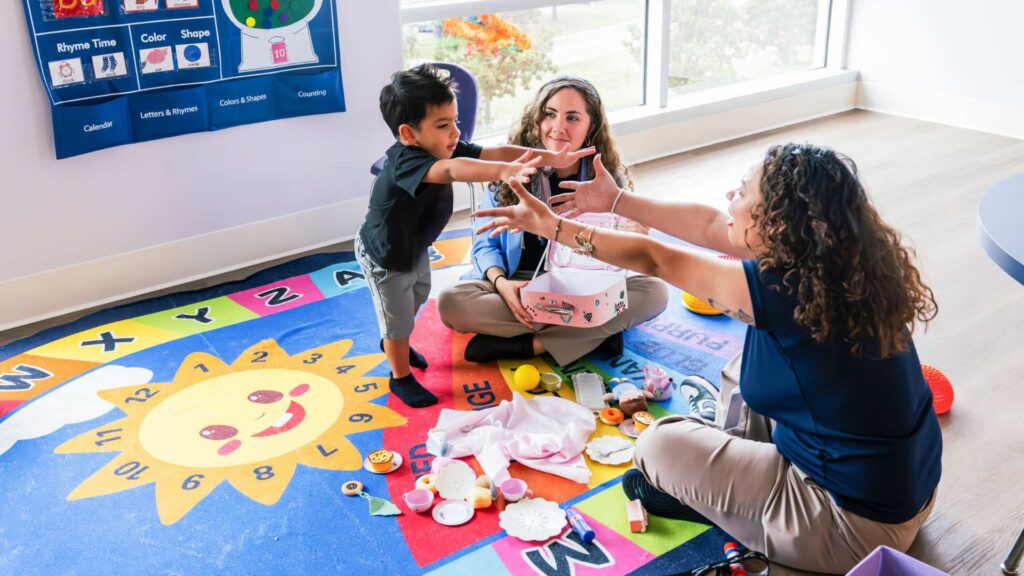
ABA therapy for toddlers can support early social skills by teaching connections in small, manageable steps. For example, this may include responding to their name, copying simple actions, taking turns, sharing attention, or playing beside another child.
For toddlers, social learning often happens through play. A therapist may roll a ball back and forth, pause during a song to encourage participation, or create a simple pretend-play routine with toy animals or cars to improve social interactions.
Emotional Regulation and Behavior Support
Many toddlers feel big emotions. That can be true for all children. But for some toddlers with autism, everyday situations can feel especially overwhelming.
For example, a loud hand dryer, feeling a scratchy shirt tag, an unexpected transition, a crowded room, or a denied request can lead to crying, screaming, dropping to the floor, or running away (elopement). These meltdowns or tantrums can sometimes become difficult to soothe and recover from.
ABA therapy for autism can help families understand what may be happening before a behavior occurs. For example, is the child trying to escape something overwhelming? Are they asking for something they cannot communicate yet? Are they confused by a transition?
Once the “why” is clearer, the team can teach safer and more helpful replacement skills.
Daily Living Skills
ABA therapy for toddlers may also support early independence.
These goals can include:
- Washing hands
- Sitting for meals
- Cleaning up toys
- Brushing teeth
- Getting dressed
- Following simple directions
- Practicing toileting readiness
- Tolerating grooming routines
For parents, these are not small things. If toothbrushing leads to a meltdown every night or getting shoes on takes 30 minutes, the whole household feels it.
ABA therapy can break these routines into smaller steps and help toddlers practice them with encouragement and consistency. Over time, that can make daily routines feel more manageable for the whole family.
What Does ABA Therapy for Toddlers Look Like?
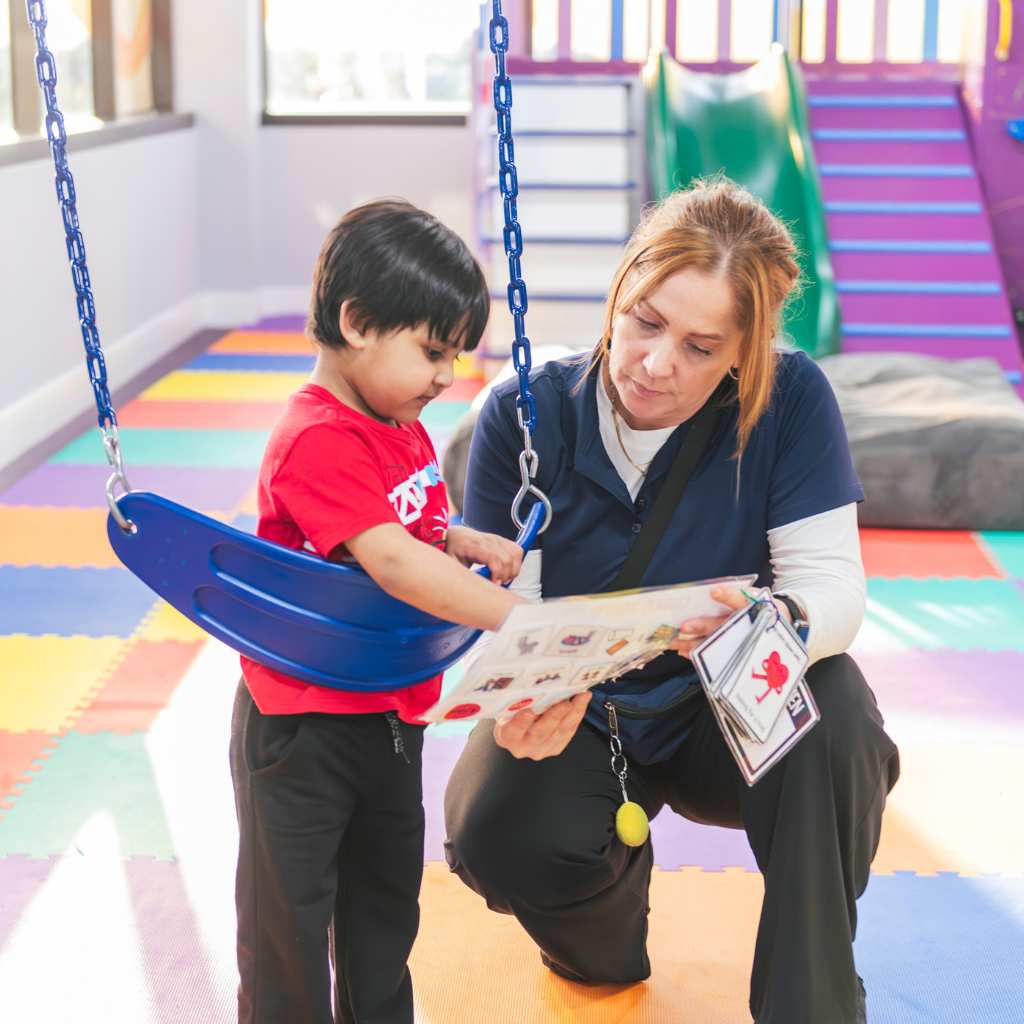
A strong ABA program should be personalized. Before therapy begins, a Board Certified Behavior Analyst, often called a BCBA, typically evaluates the child’s current skills, challenges, learning style, and family priorities.
From there, the ABA team creates a treatment plan with goals specific to the child. Next, the plan guides the delivery of ABA support.
For a toddler, a session may include:
- Play-based teaching
- One-on-one support
- Parent or caregiver involvement
- Simple routines
- Positive reinforcement
- Short practice opportunities
- Breaks when needed
- Data collection to track progress
ABA therapy for toddlers can take place at a center, at home, or in other familiar settings, based on what works best for the family. The focus is always on teaching skills your child will use in everyday life.
Why Early Intervention for Autism Matters
Early intervention for autism matters because toddlerhood is a major period of learning and brain development. This does not mean parents should panic.
Instead, if concerns are present, getting early support can help children build skills at a time when they are already learning rapidly.
Early intervention may support:
- Language development
- Social engagement
- Play skills
- Emotional regulation
- Safety awareness
- Daily routines
- Independence
- Family confidence
Some children with autism receive ABA along with speech therapy, occupational therapy, or other services, depending on their needs.
When Should Parents Ask About ABA Therapy for Toddlers?
You may want to ask about ABA therapy for toddlers if your child has an autism diagnosis or if you are already noticing developmental concerns and seeking next steps.
Signs that may lead families to ask for support include:
- Delayed speech or limited communication
- Frequent frustration because needs are hard to express
- Limited interest in social play
- Difficulty with transitions
- Strong sensory reactions
- Repetitive behaviors
- Safety concerns, such as running away
- Challenges with daily routines
- Loss of previously used words or skills
These signs don’t always mean your child needs ABA therapy, but they are worth discussing with your pediatrician or a developmental specialist. If you’re unsure, simply asking for advice can help you decide what to do next.
Trust your instincts. If something feels harder than it should, asking questions is not overreacting. It is paying attention.
Support for ABA Therapy for Toddlers in Texas
If you’re exploring ABA therapy for your toddler in Texas, you don’t have to navigate this complex journey by yourself.
Texas ABA Centers supports families through autism diagnostic testing, early intervention, and personalized ABA therapy. Our team works with children and families to understand each child’s needs and create an ABA care plan built around meaningful progress.
Contact Texas ABA Centers today at (877) 771-5725 or online to learn more about diagnostic testing, early intervention, and ABA therapy for toddlers in Texas.
We’re here to answer your questions and guide you toward the next step for your family. Ready to get started?