

Tabla de contenidos
How to Have the Autism Talk with Family Now that My Child’s Diagnosis is Official?
Receiving an autism diagnosis can bring relief, validation, and hope, but it can also leave parents wondering how to tell the people they love most. These concerns are common. Sharing an autism diagnosis is deeply personal, and every family chooses a different path. Some parents prefer to have individual conversations, while others share the news with several relatives at once. There is no “right” way to begin.
Will they understand? Will they ask difficult questions? Will they see your child differently?
What matters most is creating opportunities for understanding, not delivering the perfect explanation.
For families across Texas, those first conversations can lay the foundation for a stronger support system. When loved ones understand how your child experiences the world, they’re often better prepared to offer encouragement, respect your parenting decisions, and celebrate your child’s unique strengths.
This guide from Texas ABA Centers introduces a practical family conversation strategy to help you navigate these discussions with confidence. Rather than focusing on what autism is, we’ll focus on how to communicate about it in ways that foster empathy, reduce misunderstandings, and encourage lasting support. Let’s dive in!
Why Sharing an Autism Diagnosis Can Feel So Personal
Talking about your child’s diagnosis isn’t simply about sharing medical information; it’s also about sharing a deeply personal part of your family’s journey.
Many parents are still processing their own emotions when loved ones begin asking questions. Some feel relieved to finally have answers, while others are adjusting to new routines, therapies, and expectations. It’s completely normal if you don’t have every answer yet.
Según la University of New Mexico Center for Development and Disability, preparing ahead of difficult conversations can help people communicate with greater confidence and reduce unnecessary stress. That guidance applies equally when sharing an autism diagnosis with family members. You don’t need a perfect script; you simply need a message that reflects your child’s needs and your family’s values.
Remember that this conversation isn’t about convincing others that your child has autism. It’s about helping them understand how they can become part of your child’s support system.
The Family Conversation Strategy for Sharing an Autism Diagnosis
Every family is different, but many parents find that approaching these conversations step by step feels far less overwhelming than trying to explain everything at once.
Step 1: Decide When—and How—to Start the Conversation
One of the biggest misconceptions is that sharing an autism diagnosis must be a dramatic, face-to-face announcement.
It doesn’t.
Think about the communication style that feels most comfortable to you and your relationship with each family member.
For some parents, an in-person conversation provides space for questions and emotional connection. Others find that a thoughtful phone call, email, or group message allows them to organize their thoughts while giving relatives time to process the information before responding.

Choosing the right timing also matters. Holidays, large family gatherings, or stressful situations may not be the best moments to introduce an important conversation. Instead, look for a quieter opportunity when everyone can listen without distractions.
Beginning the discussion on your own terms can help you feel more prepared and reduce the pressure to respond immediately to every question or opinion.
Step 2: Lead with Clarity, Not Fear
One of the most powerful ways to begin an autism talk with family is by focusing on what the diagnosis means, not what people may assume it means.
Instead of presenting autism as bad news, consider explaining that the diagnosis provides clarity.
You might say something like:
“We finally have answers that help us understand how our child’s brain processes the world. This diagnosis doesn’t change who they are. It helps us understand how to support them more effectively.”
Many parents find it helpful to describe the diagnosis as an instruction manual rather than a label. Your child hasn’t changed; your family’s understanding has.
This approach often shifts the conversation away from fear and toward curiosity. It also encourages relatives to focus on your child’s strengths, personality, and potential instead of outdated stereotypes.
La Organization for Autism Research (OAR) encourages parents to have honest conversations while recognizing that family members may need time to learn about autism and understand how they can best provide support.
By leading with clarity instead of uncertainty, you’re creating space for meaningful dialogue rather than misconceptions.
Step 3: Turn Concern into Helpful Action
One of the most common responses parents hear after sharing an autism diagnosis is, “Let me know if there’s anything I can do.” While well-intentioned, many relatives simply don’t know what meaningful support looks like.
Rather than leaving the conversation open-ended, offer a few practical suggestions.
For example, you might ask family members to:
- Choose sensory-friendly toys or books instead of loud electronic gifts
- Give your child extra time to communicate without interrupting
- Respect routines during visits whenever possible
- Follow your child’s lead instead of expecting eye contact or physical affection
- Celebrate progress in ways that feel encouraging rather than comparative
These simple actions often have a much greater impact than lengthy discussions about autism itself. They also help transform concern into confidence by giving loved ones clear ways to support your family.
Step 4: Set Loving Boundaries Early
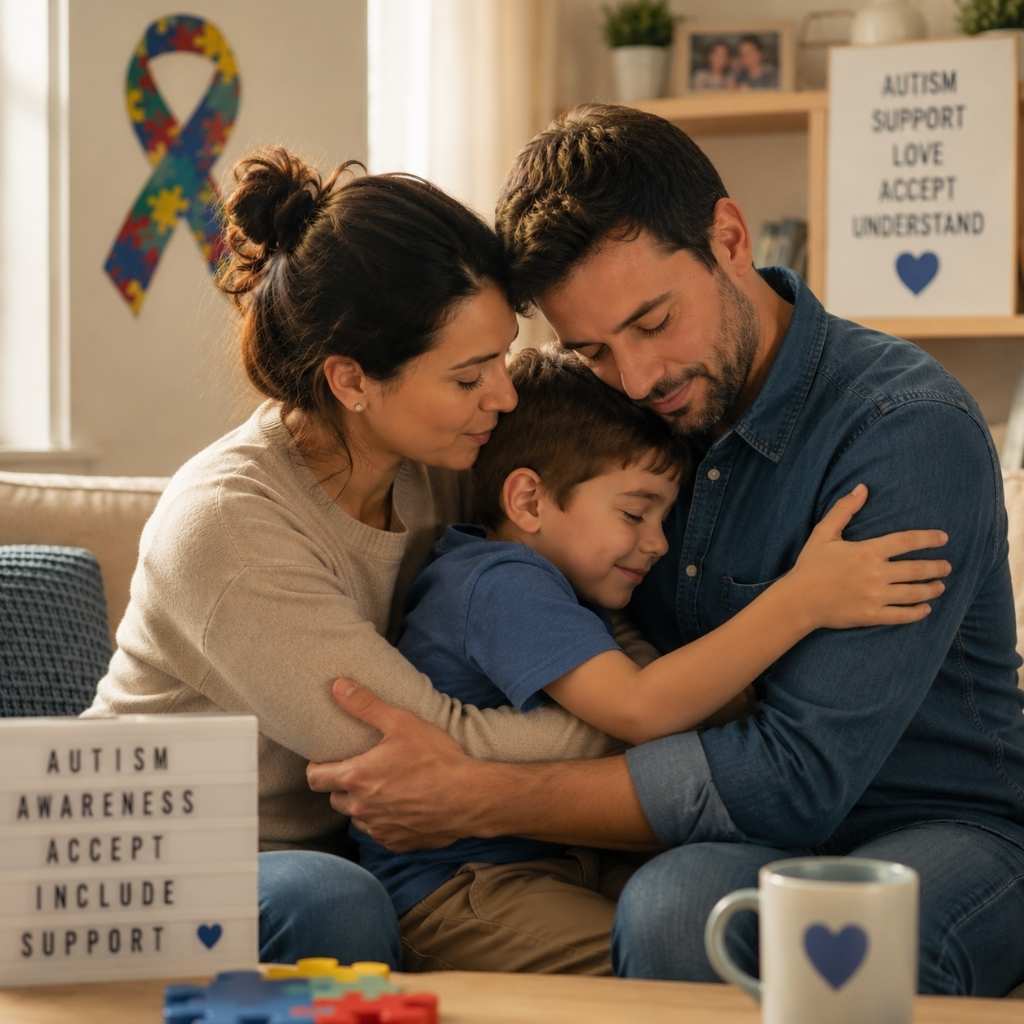
A successful autism talk with family is about much more than just sharing information; it’s also about establishing expectations that help your child feel safe and understood.
Boundaries aren’t meant to push people away. They create consistency for your child while helping family members understand how they can contribute to positive experiences.
For example, you might explain:
“We don’t force hugs or eye contact, and we follow a specific plan when our child becomes overwhelmed. We’d really appreciate everyone respecting those routines when we’re together.”
Being clear from the beginning can prevent misunderstandings later and allows everyone to focus on enjoying time together rather than navigating conflicting expectations.
La Association for Science in Autism Treatment (ASAT) encourages families to provide accurate, individualized information about autism while addressing common misconceptions with evidence-based guidance. Clear communication helps loved ones better understand your child’s unique strengths and support needs.
Step 5: Give Understanding Time to Grow
Not every conversation ends with immediate understanding, and that’s okay.
Some relatives may embrace the diagnosis right away. Others may need time to process new information, ask thoughtful questions, or let go of outdated beliefs they’ve carried for years.
Instead of measuring success by whether everyone immediately agrees, focus on creating opportunities for ongoing conversations.
Over time, many family members become some of a child’s greatest advocates simply because they were given space to learn alongside you.
Autism Awareness Begins at Home
Many people associate la conciencia sobre el autismo with community events or awareness campaigns. It often begins much closer to home.
Every respectful conversation, every accommodating family gathering, and every relative who learns to better understand your child contributes to a more accepting environment.
La Autism Speaks Parent’s Guide to Autism reminds families that learning about autism together can strengthen relationships while helping parents feel less isolated during the early stages after diagnosis.
As loved ones become more informed, your autism talk with family naturally shifts from explaining autism to working together in support of your child.
What If Someone Doesn’t Agree?
Despite your best efforts, not every conversation will go as planned.
Some people may question the diagnosis. Others may compare your child to someone else they know or suggest outdated parenting advice.
Remember that you don’t have to debate or defend your decisions.
A calm response such as:
“We’re following recommendations from our healthcare team because we want to give our child every opportunity to thrive.”
can acknowledge the comment without inviting an argument.
Likewise, it’s perfectly acceptable to end a conversation if it becomes unproductive. Protecting your own well-being allows you to focus your energy where it matters most: supporting your child.
Every Conversation Builds Your Child’s Support System

Sharing an autism diagnosis is rarely a single conversation. It’s an ongoing process that grows alongside your child and your family’s understanding.
Some discussions will feel easy. Others may take patience, repetition, and grace. The important thing is remembering that you don’t need perfect words. Honest conversations, practical guidance, and healthy boundaries often create stronger support than lengthy explanations ever could.
En Texas ABA Centers, we believe families deserve compassionate guidance beyond the diagnostic process. Through comprehensive autism evaluations, individualized ABA therapy, and family collaboration, we help parents build the confidence and knowledge needed to support their children at every stage of development.
If you’d like to learn more about our autism services or schedule a consultation, contact Texas ABA Centers today haciendo clic aquí o llamándonos al (877) 771-5725.
Our team is here to help your family move forward with confidence, understanding, and hope.








 English