



Advocacy and Autism: Advocating for Your Child at School

Student completing a classroom assignment on desk

Tabla de contenidos

How to Advocate for Your Child with Autism in School?

Starting school is an important milestone for every family, but advocacy and autism can also bring new questions when your child begins school. Parents often wonder whether their child will receive the support they need, how they will communicate with teachers, and what to do if they encounter challenges in the classroom.

There are also worries about saying the wrong thing during school meetings or being seen as “difficult” for asking questions. But the reality is that if you have a child on the spectrum, advocacy and autism go hand in hand.

Effective advocacy isn’t about conflict; it’s about learning to work collaboratively with educators to help your child succeed.

Teachers, school directors, and families: each party in the kids’ environment brings a valuable perspective. When everyone shares information and works toward common goals, children are more likely to receive the support that reflects their individual needs.

Hay investigaciones consistently shows that strong family-school partnerships contribute to better academic engagement, social development, and overall educational outcomes for students with special educational needs. Open communication, autism accommodations at school, and shared decision-making benefit not only the child but the entire educational team.

This article from Texas ABA Centers explains how parents can confidently advocate for their child at school while building collaborative relationships with educators.

Advocacy and Autism: What Does It Mean To Advocate for Autistic Students?

Advocating for a child with autism means working collaboratively with educators to ensure the school supports reflect the child’s individual strengths, learning profile, and needs.

Effective advocacy is built on preparation, communication, and a family-school partnership and goes throughout the educational journey.

Student completing a classroom assignment with individualized support for advocacy and autism

Many parents think advocacy and autism only become necessary when something goes wrong. However, some of the most effective advocacy happens long before challenges arise. Being an advocate for autistic students may involve:

  • Sharing information about your child’s strengths, interests, and communication style
  • Discussing strategies that are successful at home
  • Asking questions when you need clarification
  • Participating actively in educational planning meetings
  • Maintaining regular communication with teachers and support staff

Advocacy also means recognizing that your child’s needs may change over time. As they grow academically, socially, and emotionally, the supports that help them succeed may also need to evolve.

Rather than approaching school meetings as negotiations, it could be better to view educators as partners who share the same goal: helping the child learn, participate, and thrive.

Educational Supports for Students with Autism

Educational supports help ensure students with autism have access to learning opportunities that match their individual needs.

Depending on a student’s evaluation and eligibility, these supports may include an IEP, a Section 504 Plan, classroom accommodations, specialized instruction, or related services.

Students participating in a classroom by raising their hands during a lesson

One of the first questions many parents ask is whether their child needs an IEP or a Section 504 Plan. Although both provide support, they serve different purposes.

An Individualized Education Program (IEP) is developed for students who qualify for special education services under the Individuals with Disabilities Education Act (IDEA). The plan outlines individualized educational goals and specialized instruction to support the student’s educational progress.

La Section 504 Plan is designed for students with disabilities who require accommodations to access their education but may not need specialized instruction. Autism accommodations at school could include preferential seating, visual supports, additional time for assignments, or sensory breaks.

Because every child is different, educational plans should never follow a one-size-fits-all approach. The most effective supports are those developed through ongoing collaboration among families, educators, and the professionals involved in the child’s care.

Autism Accommodations at School That May Support Learning

Autism accommodations at school are individualized supports that help students access learning without changing academic expectations. These accommodations are selected based on each child’s unique strengths, challenges, sensory needs, communication style, and learning profile.

It’s important to understand that accommodations y modifications are not the same.

Accommodations change how a student learns or demonstrates knowledge while keeping learning expectations the same. Modifications change what a student is expected to learn by altering the curriculum or academic requirements.

Examples of accommodations that may support some autistic students include:

  • Visual schedules and written instructions
  • Sensory breaks 
  • Access to quiet spaces
  • Noise-reducing headphones when appropriate
  • Flexible seating options
  • Additional processing time
  • Communication supports, such as visual aids or AAC devices
  • Predictable routines and advance notice for schedule changes

Not every student will benefit from the same accommodations. The goal is to identify supports that reduce barriers to learning while promoting participation, independence, and meaningful engagement in the classroom.

How to Prepare for School Meetings to Talk About Advocacy and Autism

Cuando parents advocate for autistic students, preparing for school meetings can help them feel more confident and ensure conversations stay focused on their child’s needs. Bringing organized information, asking questions, and sharing both successes and challenges can lead to more productive discussions and stronger educational planning.

Before the meeting, consider:

  • Reviewing your child’s evaluations, progress reports, and report cards
  • Writing down questions or concerns you want to discuss
  • Making note of strategies that work well at home or in other settings
  • Bringing reports from healthcare providers or therapists when they’re relevant to your child’s educational needs
  • Thinking about both your child’s strengths and the areas where additional support may be helpful

Keeping notes during meetings, asking questions, and requesting copies of updated educational plans can also help you track changes over time and prepare for future conversations.

Building Positive Relationships with Teachers and School Staff

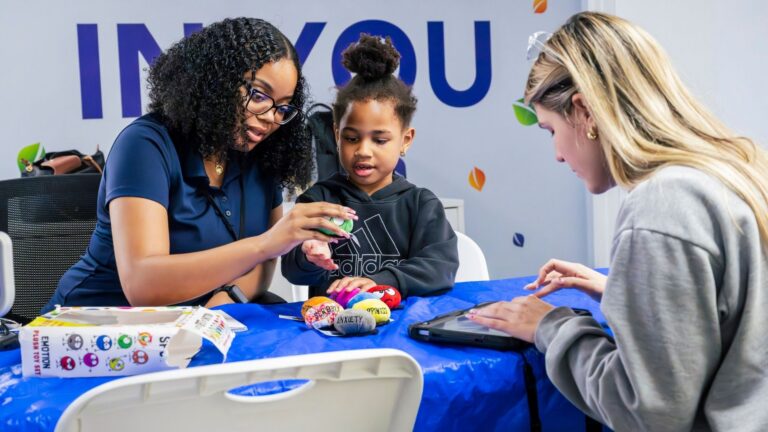
Parents meeting with school staff talk about advocacy and autism and discuss educational supports for a child

One of the most effective ways to advocate for autistic students is by building respectful, ongoing communication with the people who support them every day. Strong partnerships help families and educators solve problems together and respond more effectively as a child’s needs evolve.

Simple strategies can strengthen collaboration, including:

  • Scheduling occasional check-ins with teachers
  • Sharing updates about significant changes at home that may affect learning
  • Asking how classroom strategies are working
  • Celebrating successes alongside discussing concerns
  • Approaching challenges with curiosity and a shared commitment to problem-solving

Families also have valuable insights that educators may not see in the classroom. Likewise, teachers can offer observations that help families understand how their child participates socially, academically, and behaviorally throughout the school day.

How Advocacy and Autism May Change as Your Child Grows?

Advocacy is an ongoing process because children’s educational needs change over time. As students develop new skills, transition between grade levels, or encounter different academic expectations, their educational supports should continue evolving to reflect those changes.

Regular reviews allow families and educators to determine whether existing accommodations continue supporting the student’s success or whether adjustments should be considered.

Parents can also use information from other professionals, including healthcare providers and ABA teams, to help inform conversations with the school when appropriate.

Texas ABA Centers Helping You Navigate Advocacy and Autism

Teacher leading an interactive classroom activity with diverse group of students

When you advocate for autistic students, you don’t need to become an expert in special education law. Understanding your child’s needs and which autism accommodations at school may work for them, maintaining open communication with educators, and working together to identify supports promote meaningful participation and learning.

En Texas ABA Centers, we believe families play an essential role in every stage of a child’s development. If you’d like to learn more about our autism services or how ABA therapy can complement your child’s educational journey, visita nuestro sitio web or call (877) 771-5725. Our team is here to answer your questions and help you navigate the next steps with confidence.

Educational Disclaimer: This article is intended for informational and educational purposes only and should not be considered legal advice. Educational rights, eligibility, and school procedures may vary depending on your child’s individual circumstances and applicable federal and Texas laws.


en_USEnglish
Scroll al inicio