
Table of Contents
If you’ve found yourself Googling “why isn’t my toddler talking yet” at 2 a.m., you’re not alone.
It’s one of the most common and most emotional questions parents ask. You may be comparing your child to others at daycare, noticing missed milestones, or wondering whether to “wait it out” or take action now. That uncertainty can feel overwhelming.
Here’s the reassuring truth: not every late talker has a developmental condition. But understanding the why behind delayed speech and knowing when to act can make all the difference.
In this guide by Texas ABA Centers, we’ll walk you through what speech delays mean, how they relate to autism and speech delay, and what steps you can take today to support your child.
What Causes Speech Delay in Toddlers?
When parents ask, “Why isn’t my toddler talking yet?”, they’re often hoping for one clear answer. In reality, speech development is influenced by many factors; some temporary, some requiring support.
A late talker may experience delays for reasons such as:
- Hearing differences (like frequent ear infections)
- Oral-motor challenges (difficulty coordinating lips and tongue)
- Limited language exposure
- Developmental differences, including autism and speech delay
- Family history of late talking
Research shows that early language delays can vary widely in both cause and long-term outcomes, underscoring the importance of individualized evaluation.
It’s also crucial to understand that some toddlers simply develop language later than others. Many late talker toddlers catch up on their own. But when delays persist, or are paired with other developmental differences, it’s worth looking deeper.
So, if you’re still wondering “Why isn’t my toddler talking yet?”, the next step shouldn’t be panicking, but observation and informed action.
Is Speech Delay a Sign of Autism?
This is one of the most searched—and most sensitive—questions: “Why isn’t my toddler talking yet… could it be autism?”
The short answer: sometimes, but not always.
There is a known connection between autism and speech delay, but speech delay alone does not mean a child has autism.
According to the NHS guide on early signs of autism in children, early indicators often include differences in communication, social interaction, and behavior, not just delayed speech.
For example, a toddler with both autism and speech delay might:
- Not respond consistently to their name
- Avoid eye contact
- Show limited interest in social interaction
- Use fewer gestures (like pointing or waving)
- Prefer repetitive play patterns
Meanwhile, a late talker without autism may:
- Engage socially with caregivers
- Use gestures to communicate
- Show strong understanding of language (even if not speaking yet)
Studies exploring communication development in children with autism show that language differences often involve how language is used socially—not just when it begins.
So, if you’re asking “Why isn’t my toddler talking yet?”, it’s helpful to look at the bigger picture, not just words, but connection, interaction, and behavior.

What’s the Difference Between Speech Delay and Autism?
Understanding this distinction can bring significant relief.
A late talker typically has:
- Delayed spoken language
- Age-appropriate social engagement
- Strong nonverbal communication (pointing, smiling, eye contact)
In contrast, children with autism and speech delay may experience:
- Differences in both verbal and nonverbal communication
- Challenges with social reciprocity
- Unique patterns of play or behavior
One key difference is the intent to communicate. Many late talker toddlers are eager to connect; they just don’t have the words yet. Children with autism may communicate differently, not necessarily less.
Encouragingly, research shows that even children with significant language delays can develop meaningful communication over time with the right support.
So again, if you’re asking, “Why isn’t my toddler talking yet?”, remember: speech delay is a piece of the puzzle, not the whole picture.
When Should I Seek Professional Help for My Late Talker Toddler?
This is where many parents hesitate.
You might hear:
- “They’ll grow out of it”
- “Boys talk later”
- “Give it more time”
Sometimes that’s true. But sometimes, early support can make a significant difference in your child’s development.
Consider seeking a professional evaluation if your toddler:
- Isn’t using single words by 16–18 months
- Isn’t combining words by age 2
- Shows limited gestures or eye contact
- Seems frustrated when trying to communicate
- Has lost previously acquired language skills
And keep in mind that early evaluation doesn’t label your child; it gives you clarity.
If your child is a late talker, early support can help them catch up faster. If there’s a connection to autism and speech delay, early intervention can be life-changing.
How Is Autism Properly Diagnosed?
If concerns about autism and speech delay come up, it’s important to understand that autism is not diagnosed based on speech delay alone.
A comprehensive evaluation typically includes:
- Developmental history
- Behavioral observations
- Standardized assessments
- Input from caregivers
Experts look at patterns across communication, social interaction, and behavior, not just whether a child is a late talker. This process ensures that families get accurate answers.
So, if you’re wondering “Why isn’t my toddler talking yet?”, know that professionals won’t jump to conclusions. They’ll look at your child as a whole person.
How ABA Therapy Can Support Children with Autism and Speech Delay
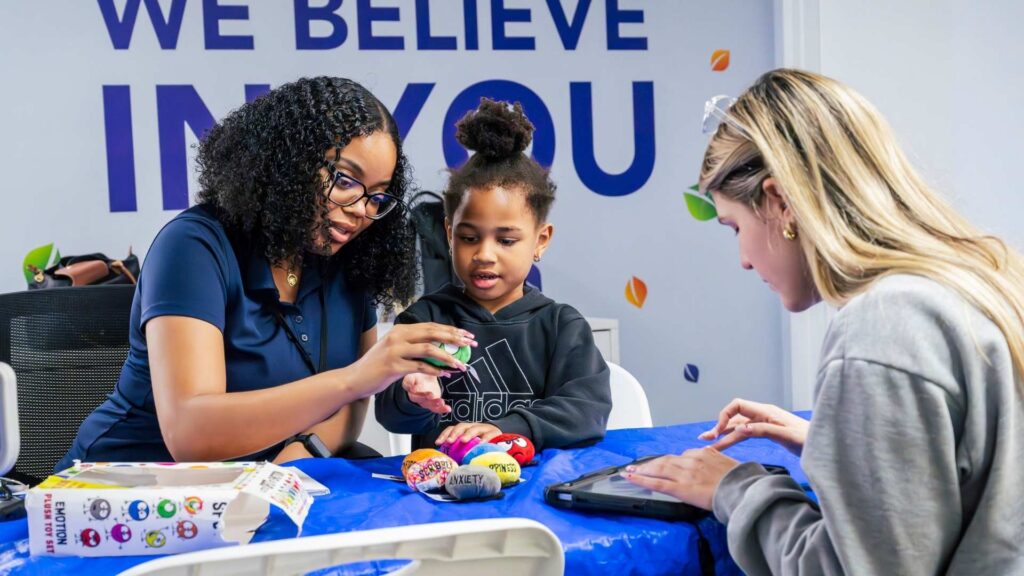
If your child is diagnosed with autism or shows signs related to autism and speech delay, there are effective, evidence-based supports available.
Applied Behavior Analysis (ABA) therapy is one of the most widely recommended approaches.
ABA therapy focuses on:
- Building communication skills (verbal and nonverbal)
- Encouraging social interaction
- Reducing frustration related to communication barriers
- Teaching functional, everyday skills
For a late talker with autism, ABA therapy doesn’t just target speech; it supports connection and self-advocacy.
Children learn how to:
- Express needs and wants
- Engage with others
- Build confidence in communication
Over time, many children gain greater independence and a stronger sense of self.
And for parents who started by asking, “Why isn’t my toddler talking yet?”, this journey often leads to something powerful: understanding, progress, and hope.
You’re Not Alone—and You Don’t Have to Guess
If there’s one thing to take away from this, it’s this:
Asking “Why isn’t my toddler talking yet?” doesn’t mean something is wrong. It means you’re paying attention.
Whether your child is a late talker, experiencing a temporary delay, or showing signs related to autism and speech delay, there are clear next steps, and people ready to help.
Take the Next Step with Texas ABA Centers
Getting professional guidance can give you the clarity you deserve.
At Texas ABA Centers, our team specializes in evaluating and supporting children with developmental differences, including autism and speech delay. We work closely with families to create personalized plans that help each child grow, communicate, and thrive.
Schedule a free consultation today by clicking here or by calling us at (877) 771-5725. Learn more about your child’s development and explore the best options for their future alongside experts.
Because every child deserves the chance to be heard, and every parent deserves peace of mind.








 Español