
The launch of Autistic Barbie represents a meaningful shift in how autism is portrayed in children’s toys. For many families raising children on the autism spectrum, autism representation has often felt limited, inaccurate, or completely absent. Now, Autistic Barbie is helping change that narrative by offering a doll designed with intention, authenticity, and respect.
More than just a new addition to the Barbie lineup, Autistic Barbie reflects growing conversations around autism representation and autism acceptance. She invites children, parents, and educators to see autism not as something to hide, but as a natural part of human diversity, worthy of visibility and understanding.
Toys shape how children see themselves and others. That is why Autistic Barbie matters, and why her impact reaches far beyond playtime.
This blog by Texas ABA Centers explores what Autistic Barbie is, what makes her different, how she supports autism representation, and why inclusive toys play a decisive role in fostering autism acceptance for children and families everywhere.
What Is Autistic Barbie?
Autistic Barbie is part of Mattel’s broader effort to create more inclusive toys that reflect real-world diversity, not only in appearance, but in lived experience. She was developed with input from autism advocates, professionals, and individuals with lived experience to ensure that her design reflects real-world needs and perspectives.
Rather than relying on stereotypes, Autistic Barbie focuses on everyday tools and supports that many autistic individuals use to feel comfortable, regulated, and confident in their environments. Her purpose is not to define autism, but to acknowledge it, honestly and positively.
Why Autism Representation in Toys Is So Powerful
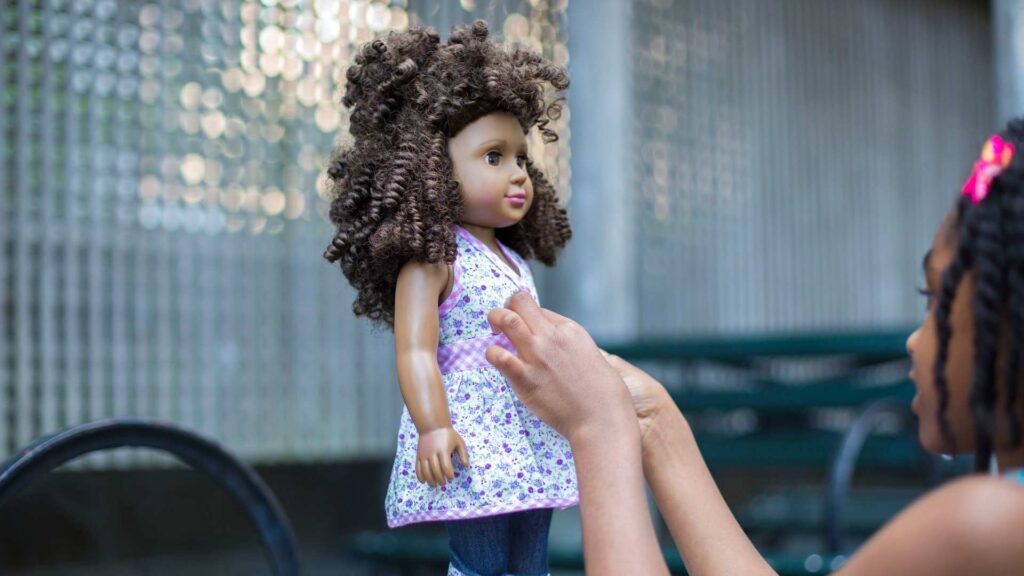
Children learn through stories and play. According to the American Academy of Pediatrics, when children engage in age-appropriate play with parents and peers, they build essential skills such as emotional regulation, communication, problem-solving, attention, and social understanding. Play also strengthens the brain systems responsible for executive functioning, skills that help children focus, manage impulses, and work toward goals.
When toys reflect only one type of experience, children who live outside that narrative may feel unseen. Autism representation in toys like Autistic Barbie helps fill that gap.
For children on the autism spectrum, seeing a doll that mirrors their experiences can be deeply validating. It reinforces the idea that they are not alone and that their needs are understood. For neurotypical children, Autistic Barbie helps normalize differences and encourages empathy from an early age.
Inclusive toys support conversations that might otherwise feel difficult. Through play, children naturally learn that people experience the world differently, and that those differences deserve respect.
What Makes Autistic Barbie Different?
Autistic Barbie stands out because of the thoughtful, meaningful details built into her design. Each feature reflects everyday experiences within the autism community, particularly around sensory processing, communication, and self-regulation through movement.
Sensory-Conscious Design
Many individuals with autism are sensitive to visual and tactile input. Autistic Barbie’s clothing features soft fabrics, calming colors, and patterns designed to feel soothing rather than overstimulating.
Noise-Canceling Headphones
One of Autistic Barbie’s most meaningful accessories is her pair of noise-canceling headphones. These represent a widely used sensory support that helps reduce overwhelming sounds in busy environments.
Fidget Spinner for Self-Regulation
Among Autistic Barbie’s accessories is a fidget spinner, representing a tool many individuals use to support focus, calm, and sensory regulation. Fidgeting can help process sensory input, manage anxiety, or maintain attention during activities.
Articulated Body That Allows Natural Movement
Autistic Barbie features articulated elbows and wrists, allowing for a wide range of natural hand and arm movements.
Communication Symbol Accessories
Autistic Barbie also includes accessories that reference alternative and visual communication methods. These subtle details acknowledge that communication is not one-size-fits-all and that spoken language is only one of many valid ways to connect.
Subtle Eye Gaze Variation
Autistic Barbie’s facial design includes a gentle side-shifted eye gaze. This detail reflects how some autistic individuals may avoid or limit direct eye contact, not out of disinterest, but as a way to feel more comfortable during social interactions.
Autistic Barbie and Autism Acceptance






 Español