

Tabla de contenidos
How Is Autism Diagnosed in Young Children?
When parents first notice differences in their child’s communication, play, behavior, or development, one of their first questions is often, “Could my child be diagnosed with autism?”
A child can only be diagnosed with autism after a formal evaluation by qualified professionals.
The process typically considers communication, social skills, behavioral patterns, developmental history, and whether the child meets the diagnostic criteria for trastorno del espectro autista (TEA).
Understanding the diagnóstico de autismo process can feel overwhelming, especially when you are unsure what to expect. However, an accurate diagnosis can help bring clarity and open the door to early support, therapy, and services that may help your child thrive.
According to the latest estadísticas de autismo in the U.S., ASD is now identified in 1 in 31 children. Autism is considered a “spectrum” disorder because every child may show different strengths, challenges, symptoms, and levels of support needs.
To be diagnosed with autism by a licensed provider, a child must meet the criteria outlined in the DSM-5, the diagnostic guidelines established and recognized by the CDC.
Early intervention for autism in young children is crucial because it can help them access the services and support they need during important developmental years.
En Texas ABA Centers, we help families access autism testing and diagnosis without the burden of a long waitlist, so children can begin receiving support as soon as possible.
This guide explains how young children are diagnosed with autism, what professionals look for during the evaluation, and what happens after an autism diagnosis.
Autism in Young Children: How Does Diagnosis Work?
A child is diagnosed with autism through a comprehensive evaluation performed by qualified medical or developmental professionals.
This evaluation may include parent interviews, developmental screenings, direct observation, standardized assessments, and a review of the child’s communication, behavior, social interaction, and daily living skills.
For many families, the process typically begins with a pediatrician. During regular checkups, pediatricians monitor developmental milestones and often screen children for autism between 18 and 24 months of age.
If providers notice signs that may indicate autism, they may recommend a more comprehensive evaluation.
Every child is different, and autism traits can range from subtle to more noticeable. However, autism is not a disease. It is a developmental disorder that can affect communication, behavior, learning, sensory processing, and social interaction.
With the right support, though, many children diagnosed with autism can build important skills and make meaningful progress.
What Happens During an Autism Diagnosis Evaluation?
The goal of an autism diagnosis evaluation is to understand your child, not just focus on one behavior or concern.
The provider may ask about your child’s developmental history, including when they began talking, pointing, walking, responding to their name, making eye contact, playing with others, and using gestures.
The pediatrician or provider may also ask about repetitive behaviors, sensory sensitivities, routines, sleep, eating patterns, and emotional responses.
Parents and caregivers play an important role in the autism diagnosis process. You can support the evaluation by bringing medical records, previous test results, school or daycare notes, caregiver observations, and examples of behaviors that concern you.
Even details that seem small may help the provider better understand whether your child should be diagnosed with autism.
Autism Diagnosis and Developmental Skills
A key part of the evaluation of autism in young children is looking at the child’s fundamental skills. These may include language, communication, problem-solving, social interaction, play, daily living skills, and cognitive development.
In some cases, the provider may also evaluate attention, memory, motor skills, academic readiness, or adaptive functioning.
These areas can help professionals understand your child’s strengths and challenges and determine whether their development aligns with an autism diagnosis.
Behavioral observations are also important. The provider may watch how your child plays, responds to instructions, communicates needs, reacts to changes, interacts with others, or engages with toys and objects.
These observations help create a clearer picture of your child’s development.
Physical Examination During the Autism Diagnosis Process
In some cases, physical exams or related tests may help identify factors connected to , retrasos en el desarrollo. and autism. This does not mean every child will need extensive medical testing, but it does mean the evaluation process is thorough.
This step can help rule out other medical concerns that may contribute to developmental delays, communication challenges, or difficult behaviors.
Common Signs of Autism in Young Children
Sometimes, children are not diagnosed with autism quickly because early signs can be mild, inconsistent, or mistaken for other developmental concerns.
Some families may also be unfamiliar with autism symptoms, especially in very young children, and unintentionally avoid essential treatments and the diagnostic process entirely.
Recognizing early autism signs is important because research has shown that receiving needed , las intervenciones necesarias en la primera infancia conduce a mejores resultados.
If you notice signs of autism in your child, speaking with a medical provider can help you decide whether an autism diagnosis evaluation is the next step.
Physical Signs Related to Autism Diagnosis
Some children later diagnosed with autism may exhibit physical or movement-related behaviors such as hand flapping, repetitive finger movements, rocking, spinning, delayed motor skills, or unusual body movements.
Other possible signs may include limited facial expressions by nine months, limited gestures such as waving by 12 months, lack of pretend play by age five, hyperactive or inattentive behavior, gastrointestinal issues, seizure disorders, or unusually strong or limited fear responses.
Social and Communication Signs of Autism in Young Children
Social and communication differences are often key signs that lead parents to seek an autism diagnosis.
These may include delayed language development, limited eye contact, not responding to their name by 9 months, or not engaging in simple interactive games like peek-a-boo by 12 months.
Some children may have difficulty understanding others’ feelings, show limited interest in playing with other children, or prefer to play alone. Others may communicate in ways that are different from expected developmental milestones.
Behavioral Signs That May Point to Autism
Children diagnosed with autism may also show repetitive behaviors, strong routines, or intense interests.
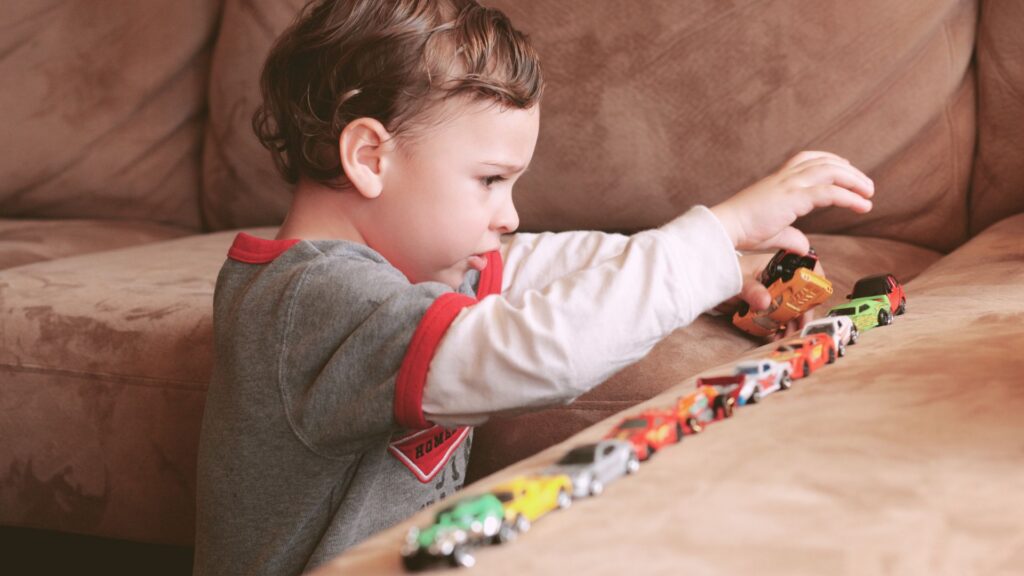
For example, they may line up toys instead of playing with them, become distressed when routines change, repeat words or phrases, memorize and repeat movie lines, or focus on specific parts of objects.
Sensory Differences Related to Autism
Sensory differences are also common among people with neurodiversity. A child may have strong reactions to sounds, smells, tastes, lights, textures, or certain environments.
Other signs can include unusual eating or sleeping patterns, uncommon emotional reactions, anxiety, stress, excessive worry, or difficulty coping with change.
How Long Does an Autism Diagnosis Take?
The timeline for an autism diagnosis can vary for every family, depending on provider availability, evaluation requirements, and the child’s individual needs.
While some families may receive answers in as little as 24 hours, others may experience a longer process that can take weeks or months.
What Happens After an Autism Diagnosis?
To receive an official autism diagnosis, a child must meet the DSM-5 criteria for autism spectrum disorder.
After autism testing is complete, specialists review the results and explain whether your child meets the criteria to be diagnosed with autism.
What happens after an autism diagnosis will depend on your child’s age, needs, strengths, and support goals. For many families, the next important step is choosing an autism therapy provider that can help create an individualized plan.
Time is important, and beginning support early may help your child build communication, social, behavioral, and daily living skills.
How Can Texas ABA Centers Help After an Autism Diagnosis?
Applied Behavior Analysis therapy, or ABA therapy, is an FDA-acknowledged, scientifically supported approach widely recognized as the gold standard in autism therapy.
ABA therapy is individualized to meet each child’s unique needs, helping address challenges while building on strengths.
En Texas ABA Centers, we understand how important autism testing and diagnosis can be for families. Receiving an early autism diagnosis may feel emotional, but it can also be the first step toward helping your child access the treatment, structure, and support they need.
Our team of autism experts can guide your family through the process, from diagnosis to therapy planning. Call us at (877) 771-5725 for a free consultation, or visita nuestro sitio web to contact us.








 English